


Table of Contents
- How to Identify Authentic Birthstones: What You Need to Know
- Birthstone Chart and Month Reference
- How to Tell If a Gemstone Is Real
- Natural vs. Lab-Grown Gemstones
- Gemstone Treatments and Disclosure
- Gemstone Identification Certificate and Verification
- Practical Steps to Verify Your Birthstone Jewelry
- Frequently Asked Questions
Last Updated: October 15, 2026
How to Identify Authentic Birthstones: What You Need to Know
Buying birthstone jewelry is deeply personal: you're selecting a gemstone tied to someone's birth month, often for a milestone occasion. But the market is flooded with treatments, lab-created stones, and outright imitations.
At Elvora Gifts, we understand this concern. This guide walks you through practical methods to verify a birthstone's authenticity, understand the differences between natural and lab-grown stones, and spot red flags before you buy.
The stakes matter. A treated birthstone may cost half the price of an untreated one. A lab-grown gemstone looks identical to the naked eye but carries different value. And imitation stones can fade or crack within months.
Birthstone Chart and Month Reference
Every month has an assigned birthstone, though some months have multiple options.
Traditional vs. Modern Birthstones
Traditional birthstones date back centuries and are based on historical and cultural associations. Modern birthstones were standardized in 1912 by the American National Retail Jewelers Association. Some months have both options.
| Month | Traditional Birthstone | Modern Birthstone |
|---|---|---|
| January | Garnet | Garnet |
| February | Amethyst | Amethyst |
| March | Bloodstone, Aquamarine | Aquamarine |
| April | Diamond, Sapphire | Diamond |
| May | Emerald | Emerald |
| June | Pearl, Alexandrite | Pearl, Alexandrite, Moonstone |
| July | Ruby | Ruby |
| August | Peridot | Peridot |
| September | Sapphire | Sapphire |
| October | Opal, Tourmaline | Opal, Tourmaline |
| November | Topaz, Citrine | Topaz, Citrine |
| December | Blue Topaz, Turquoise | Blue Topaz, Tanzanite, Turquoise |
When selecting a birthstone gift, clarify which version the recipient prefers. Some people connect more strongly to traditional stones for their historical significance. Others prefer modern options for their availability or color variety.
How to Tell If a Gemstone Is Real
The most common question when buying birthstone jewelry is simple: Is this gemstone real? Real gemstones are natural minerals formed over millions of years, with physical properties that distinguish them from imitations.
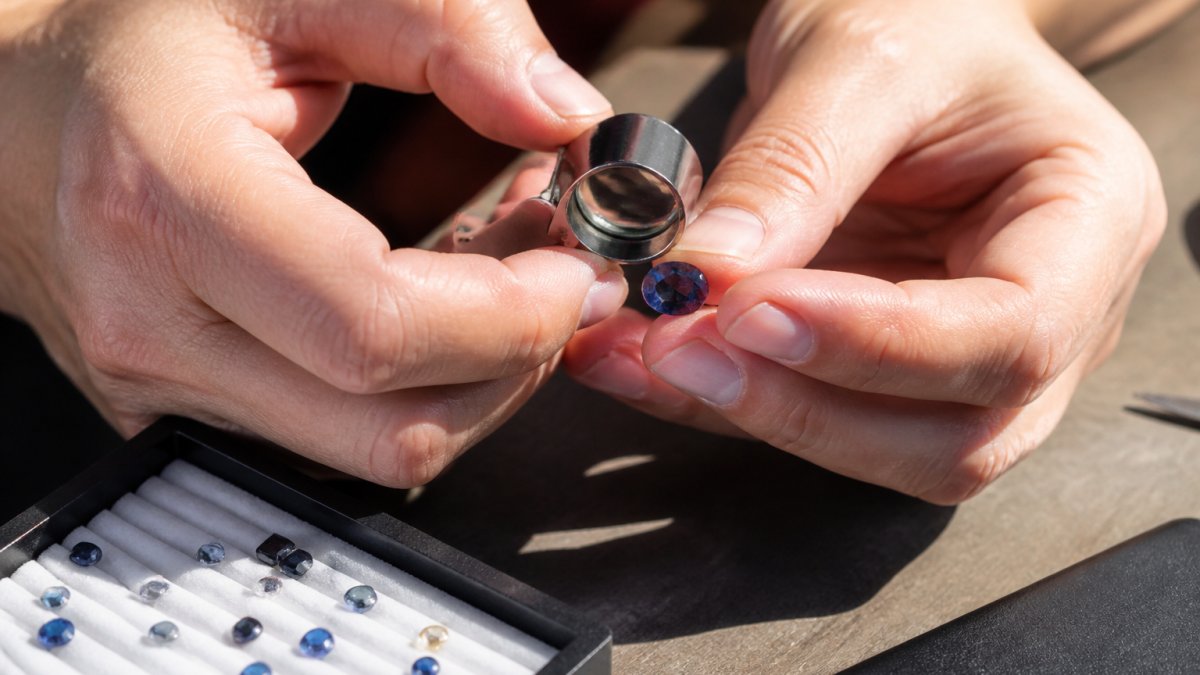
Visual Inspection and Clarity Tests
Start with your eyes. Authentic gemstones have characteristics that imitations lack.
Look for inclusions. Natural gemstones almost always contain inclusions, tiny materials trapped inside the stone during formation. These aren't flaws; they're proof of authenticity.
Check the color distribution. Natural gemstones rarely have uniform color; you'll see subtle variations, color zoning, or shifts depending on the light. Synthetics often display suspiciously perfect, even color.
Examine the surface. Run your finger over the polished stone. Natural gemstones feel smooth and slightly cool; imitations, especially glass, may feel sticky or show tiny scratches under magnification.
Weight and Hardness Indicators
Weight matters. Gemstones have specific gravity, a measure of density, so a genuine ruby weighs more than a glass imitation of the same size.
The weight test. Weigh the stone on a jeweler's scale and compare it to published density values. A ruby should weigh approximately 3.97 grams per cubic centimeter; if your stone is significantly lighter, it's likely an imitation (Natural Gemstones).
The hardness test. Hardness is measured on the Mohs scale, from 1 (softest) to 10 (hardest): diamond is 10, ruby and sapphire 9, topaz 8, emerald 7.5 to 8. Knowing your birthstone's hardness helps you spot fakes.
A simple hardness check: try to scratch the stone with a steel file. If it scratches easily, it's not genuine; if it resists, it passes.
Limits of At-Home Testing
At-home testing has real limits. You can spot obvious fakes, glass imitations, painted stones, or severely damaged gemstones, but distinguishing a natural birthstone from a high-quality lab-grown stone requires professional equipment.
Many industry treatments are invisible to the naked eye.
The refractive index test requires a refractometer most people don't own, and the specific gravity test needs precise scales. Even then, these tests only narrow down possibilities, they don't provide certainty.
This is why gemological reports exist. They're not just nice to have; they're essential for expensive birthstone jewelry.
Natural vs. Lab-Grown Gemstones
Lab-grown gemstones are chemically identical to natural stones, forming in a laboratory over weeks or months instead of millions of years underground. They're beautiful and durable, but the distinction matters for value and authenticity.
How Lab-Grown Stones Differ Physically
Lab-grown gemstones are created through two main methods: the Czochralski method (pulling a crystal from molten material) and the hydrothermal method (growing crystals under heat and pressure in a water-based solution).
The result is chemically identical: a lab-grown ruby has the same hardness, color, and refractive index as a natural one.
When shopping for a birthstone, ask directly: Is this natural or lab-grown? Reputable sellers disclose this upfront; if they don't, ask for a gemological report.
Imitation Stones and Synthetic Alternatives
Imitation stones differ from lab-grown gemstones: they're not chemically identical to the natural stone, just substitutes that look similar but have different properties.
Common imitations include:
- Glass: Inexpensive, soft, scratches easily, lacks the sparkle of genuine gemstones
- Cubic zirconia: Sparkles more than natural diamonds, but clouds over time with wear
- Synthetic spinel: Used as a substitute for birthstones like ruby or sapphire, but softer and less durable
- Painted stones: A cheap base stone with color painted on the back to mimic a birthstone
Imitation stones aren't inherently bad, they suit costume jewelry or temporary pieces, but they're not suitable for meaningful birthstone gifts because they deteriorate quickly.
Gemstone Treatments and Disclosure
Most birthstones on the market have been treated in some way, and heat treatment, irradiation, and fracture filling are standard. The question isn't whether a stone is treated, but whether the treatment was disclosed and how it affects value.
Common Treatments That Affect Value
Heat treatment is the most common: rubies and sapphires are routinely heated to improve color and clarity. It's accepted industry practice and doesn't significantly reduce value if disclosed.
Fracture filling uses oils, resins, or glass-like materials to fill surface fractures, improving appearance but reducing durability.
Irradiation uses radiation to change or enhance color. Some birthstones, like topaz and tourmaline, are routinely irradiated; the color is permanent, but the treatment must be disclosed.
Dyeing is applied to porous stones like turquoise or opal to deepen or change color. Dyed stones fade with wear and exposure to chemicals.
The critical rule: any treatment should be disclosed by the seller.
Gemstone Identification Certificate and Verification
A gemological report (also called a certificate or grading report) is your strongest protection when buying birthstone jewelry: an independent assessment of the stone's authenticity, origin, treatments, and quality.
What a Gemological Report Should Include
A legitimate gemological report includes:
- Stone identification: The gemstone type (ruby, sapphire, emerald, etc.)
- Origin: Whether the stone is natural or lab-grown
- Treatments: Any treatments applied (heat, fracture filling, irradiation, etc.)
- Color grade: The stone's color quality on a standardized scale
- Clarity grade: The visibility of inclusions
- Cut: How well the stone is shaped and proportioned
- Carat weight: The stone's weight
- Dimensions: The stone's measurements
- Unique identifiers: Laser inscription or microscopic markings that tie the report to the specific stone
Reputable gemological laboratories include the Gemological Institute of America (GIA), the American Gem Society (AGS), and the International Gemological Institute (IGI).
How to Verify Certificate Authenticity
A report is only as good as the laboratory that issued it. Verify authenticity by:
Checking the laboratory's website. Most major labs let you enter the report number and verify the stone's details online. If the lab doesn't offer this, be skeptical.
Confirming the lab's credentials. GIA and AGS are the most widely recognized, IGI is also reputable, and smaller labs' reports carry less weight in the market.
Looking for security features. Legitimate reports include holograms, watermarks, or other anti-fraud measures. Counterfeit reports exist, they're surprisingly common in online sales.
Requesting the original report. When buying secondhand or online, ask for the original report, not a photocopy, since scammers sometimes alter photocopies.
A report from a recognized laboratory is your proof of authenticity. Without one, you're relying on the seller's word and your own inspection skills.
Practical Steps to Verify Your Birthstone Jewelry
Here's a checklist to follow before making your purchase.
Questions to Ask Before Buying
Ask any seller offering birthstone jewelry:
- Is this stone natural or lab-grown?
- Has this stone been treated? If so, how?
- Do you have a gemological report for this stone?
- What is the stone's carat weight and dimensions?
- Is this stone certified conflict-free?
- What is your return policy if the stone doesn't meet expectations?
- Can you provide documentation of the stone's origin?
Reputable sellers answer directly. If a seller becomes evasive, move on.
Red Flags in Online and Secondhand Purchases
Online and secondhand purchases carry higher risk. Watch for these warning signs:
- No gemological report. If a seller won't provide a report for a stone over $500, that's a red flag.
- Price too low. A natural ruby should cost more than a lab-grown one. If the price seems unrealistic, the stone likely isn't what's advertised.
- Vague descriptions. Phrases like "genuine," "real," or "authentic" without specifics don't tell you whether the stone is natural or treated.
- No return policy. Legitimate sellers offer returns, without one you have no recourse if the stone is misrepresented.
- Pressure to buy quickly. Scammers create artificial urgency. Take your time.
- Stock photos. If the listing shows professional photos but the seller can't provide photos of the actual stone, be cautious.
When buying from any reputable retailer, you're protected by their commitment to quality and transparency. We curate birthstone jewelry with authenticity and quality at the forefront.
Learning how to identify authentic birthstones protects your investment and ensures your gift carries genuine value. Whether you choose a natural gemstone for its rarity or a lab-grown stone for its sustainability, understanding the differences between natural, lab-grown, treated, and imitation stones makes you a confident buyer. Look for sellers who provide gemological reports, answer questions transparently, and stand behind their products. At Elvora Gifts, we curate birthstone jewelry with authenticity and quality at the forefront.
Frequently Asked Questions
How do I know if my birthstone is real or imitation?
Real gemstones have consistent weight, clarity patterns, and light refraction that imitations cannot match. Check for a gemological report from a certified lab like the Gemological Institute of America. Imitation stones often feel lighter, have uniform coloring, and lack the natural inclusions found in authentic birthstones. Request seller documentation and ask whether the stone is natural, lab-grown, or synthetic before purchasing.
What is the difference between natural, lab-grown, and imitation birthstones?
Natural gemstones form in the earth over millions of years and contain unique inclusions and color variations. Lab-grown stones have the same chemical composition as natural gems but are created in controlled laboratory settings in weeks or months. Imitation stones are made from entirely different materials like glass or plastic that mimic a gemstone's appearance but lack its durability and optical properties. Lab-grown birthstones are authentic and durable; imitations are not.
Do I need a gemstone identification certificate when buying birthstone jewelry?
A gemological report is essential for high-value birthstones and provides independent verification of authenticity, treatments, and quality. Reputable sellers should disclose whether a stone has been heat-treated, dyed, or irradiated. For lower-cost pieces, a certificate is less critical, but always ask the seller directly about treatments and request documentation. Certificates from recognized labs like the Gemological Institute of America carry the most weight.
What gemstone treatments should I know about before buying?
Common treatments include heat treatment to improve color, dyeing to enhance appearance, and irradiation to change hue. These treatments are legal and widely used but should be disclosed by the seller, as they can affect long-term durability and value. Ask whether your birthstone has undergone any treatments and request written confirmation. Untreated stones command higher prices but treated stones can still be beautiful and authentic if properly disclosed.


