


Table of Contents
- Understanding Quality Jewelry Fundamentals
- How to Identify Real Gold Jewelry and Precious Metals
- How to Check Diamond Quality and Gemstone Certification
- Fine Jewelry vs Costume Jewelry: Key Differences
- Evaluating Craftsmanship and Setting Integrity
- Simple At-Home Tests and Visual Inspection Checklist
- Maintenance and Longevity: Protecting Your Investment
- Ethical Sourcing and Sustainable Jewelry Practices
Last Updated: August 13, 2026
Understanding Quality Jewelry Fundamentals
Quality jewelry combines precious materials, expert craftsmanship, and durability in ways that distinguish it from mass-produced alternatives. The foundation rests on three pillars: material authenticity, construction excellence, and design integrity. A piece might look beautiful in a photo, but true quality reveals itself through careful examination of hallmarks, metal purity, gemstone certification, and how components fit together. Understanding these fundamentals protects your investment and ensures you're paying for genuine value, not just appearance.
How to Identify Real Gold Jewelry and Precious Metals
Real gold jewelry holds its value and resists tarnish in ways that plated or filled alternatives cannot. The first step in evaluating quality jewelry is confirming that what you're buying is actually what it claims to be.
Checking Hallmarks and Quality Stamps
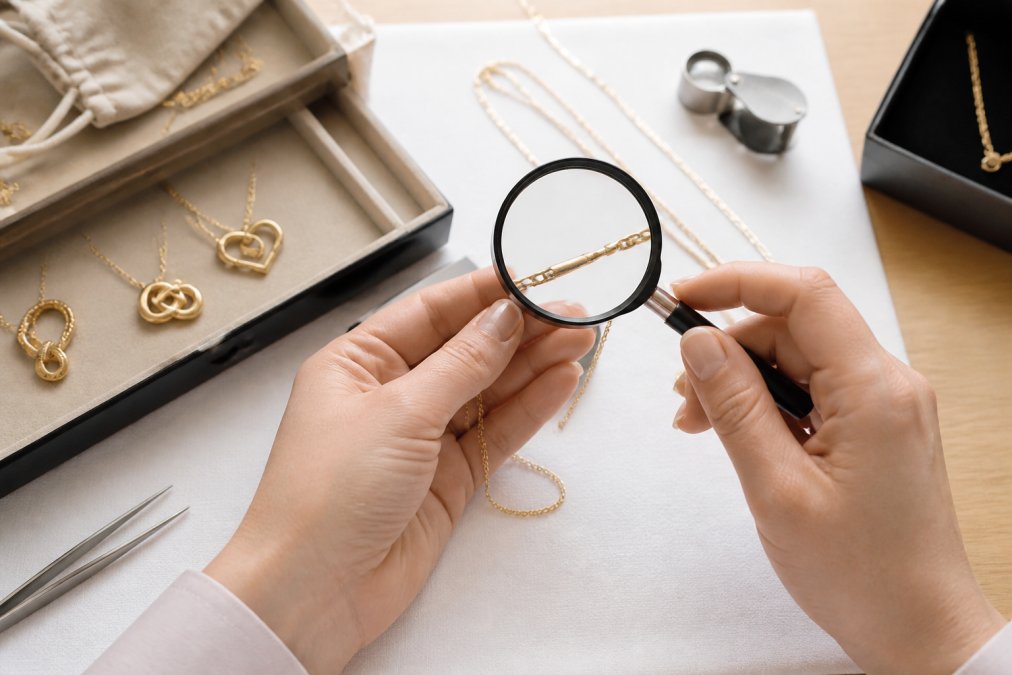
Every legitimate piece of gold jewelry should bear a hallmark, a small stamp indicating the metal type and purity. Look for marks like 10K, 14K, 18K, or 24K on the inside of rings, the clasp of necklaces, or the post of earrings. The number represents the proportion of pure gold in the alloy. Legitimate hallmarks should be crisp and clear, not blurry or worn.
Beyond gold, look for stamps indicating other precious metals. Sterling silver bears a .925 mark, platinum shows 950 or 900, and palladium displays 950 or 500. If you see "gold-plated" or "gold-filled" stamped on a piece, you're buying a thin layer of gold bonded to a base metal, not solid precious metal.
Understanding Karat Weight and Metal Purity
Karat weight directly determines the percentage of pure gold in your piece. 24K gold is pure gold, but it's too soft for jewelry that needs to withstand daily wear. 14K gold contains 58.3% pure gold and is the most common karat weight for engagement rings and fine jewelry because it offers the best balance between gold content and strength. 18K gold contains 75% pure gold and offers richer color, but it's softer and more prone to scratching. 10K gold contains 41.7% pure gold and is the minimum karat weight that can legally be called "gold" in the United States.
Understanding this matters because it affects both durability and resale value. A 14K piece will maintain its value better than a 10K piece of identical design and will show fewer scratches after years of wear.
How to Check Diamond Quality and Gemstone Certification
Gemstones are where quality jewelry truly separates from costume pieces. Certification and the four fundamental quality measures determine both beauty and value.
The Four C's: Cut, Color, Clarity, and Carat Weight
Cut refers to how well the stone has been shaped and faceted. A well-cut gemstone reflects light brilliantly, creating sparkle and fire. Cut quality depends on the angles of the facets, the symmetry of the design, and the polish of the surfaces. This is the one C entirely dependent on human craftsmanship.
Color in diamonds is graded on a scale from D (colorless) to Z (light color). Subtle color differences significantly affect appearance and price. For colored gemstones like sapphires and emeralds, color saturation and hue are the primary quality measures.
Clarity measures the presence of inclusions, tiny imperfections inside the stone. The GIA clarity scale ranges from Flawless to Included. Most diamonds have some inclusions; the question is whether they're visible to the naked eye. A VS1 (Very Slightly Included) stone might have inclusions visible only under magnification, while an SI1 (Slightly Included) stone might have inclusions barely visible to the naked eye.
Carat weight is the weight of the stone, measured in carats. One carat equals 200 milligrams. Carat weight has a non-linear relationship with price; a two-carat diamond costs significantly more than twice the price of a one-carat diamond of similar quality.
Verifying Gemstone Authenticity Through Certification
Certification is non-negotiable for valuable gemstones. A gemstone certificate from a reputable lab like the Gemological Institute of America (GIA) documents the stone's characteristics and confirms its authenticity. A genuine certificate includes specific measurements, weight, color grade, clarity grade, and cut assessment. It also notes any treatments the stone has undergone.
When buying quality jewelry with significant gemstones, request certification before making your purchase. If a seller resists providing certification, that's a red flag. For pieces from Elvora Gifts featuring precious gemstones, certification documentation provides the assurance you need when selecting a meaningful gift.
Fine Jewelry vs Costume Jewelry: Key Differences
Fine jewelry uses precious metals (gold, silver, platinum, palladium) and genuine gemstones. The metals are solid throughout, not plated or filled. Fine jewelry is designed to last decades or generations with proper care and can be resized, repaired, and restored by jewelers.
Costume jewelry uses base metals often coated with gold or silver plating. Stones are typically glass or synthetic materials. The construction prioritizes appearance over durability and is designed for fashion trends and seasonal wear. Once plating wears through or stones become loose, repair is often impractical.
The real cost difference emerges over time. A fine jewelry piece costs more upfront but maintains or increases in value. A costume piece costs less initially but deteriorates within months or years. For gifts intended to be treasured, fine jewelry represents genuine value.
Evaluating Craftsmanship and Setting Integrity
The way a piece is constructed separates quality jewelry from pieces that look good in photos but fall apart in reality.
Assessing Clasp Durability and Construction
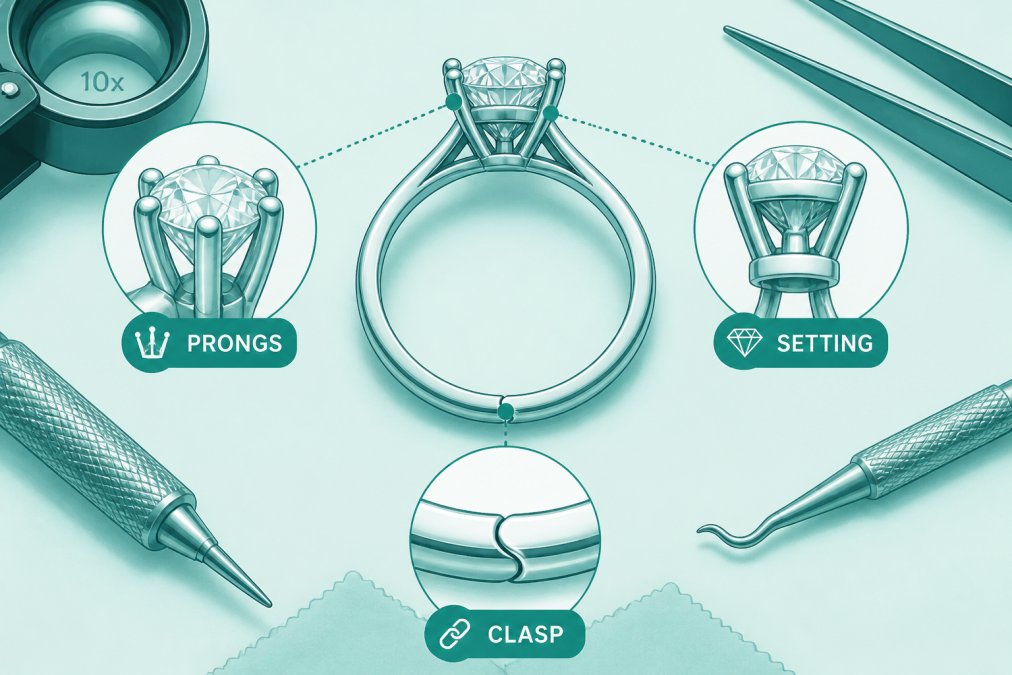
Clasps endure more stress than any other component of jewelry. Examine the clasp mechanism closely. Lobster clasps are the most common and durable, using a spring-loaded mechanism that's reliable and easy to operate. The quality of the clasp mechanism matters; cheap clasps use thin, weak springs that fail within months.
The attachment point where the clasp connects to the chain or band is equally critical. In quality jewelry, the attachment is soldered securely, not simply glued or crimped. Check that all moving parts operate smoothly. A clasp that sticks or requires excessive force to open is either poorly made or damaged.
Spotting Quality Workmanship in Jewelry Design
Quality workmanship reveals itself in details most people never consciously notice. Run your fingers along the metal surfaces. Quality jewelry has smooth, even finishes with no rough spots or sharp edges.
Examine how gemstones are set. In quality jewelry, stones sit securely in their settings with no movement or wiggle. The prongs holding the stone should be even and symmetrical. Inspect the underside of the setting; quality work shows clean, finished metal, not rough casting marks.
Look at the overall symmetry of the piece. In a pair of earrings, the designs should be mirror images. In a ring, the band should be even width all the way around. The weight of the piece provides another clue. Quality jewelry feels substantial in your hand, appropriately weighted for its size and materials.
Simple At-Home Tests and Visual Inspection Checklist
Before you commit to a purchase, perform these straightforward evaluations.
The magnet test: Hold a small magnet near the jewelry. Precious metals like gold, silver, and platinum are non-magnetic. If the piece is attracted to the magnet, it contains significant iron or other ferrous metals, indicating it's not solid precious metal.
The weight and feel test: Compare the piece to others you know are genuine. Precious metals have specific densities. A solid gold piece feels noticeably heavier than a similarly-sized plated piece.
The visual inspection checklist:
- Are hallmarks present, clear, and consistent with the claimed metal type?
- Does the metal finish look even and well-polished, or rough and uneven?
- Are all moving parts secure and smooth-operating?
- Are gemstones secure in their settings with no visible movement?
- Is the overall design symmetrical and well-proportioned?
- Are there any visible cracks, chips, or damage to stones?
- Does the piece feel appropriately weighted for its materials and size?
The tarnish test: Silver naturally tarnishes over time, a sign of genuine silver. Cheap plated pieces often don't tarnish because the base metal underneath isn't silver.
The professional appraisal: For significant purchases, have the piece evaluated by an independent jeweler. An appraisal provides documentation of the piece's materials, gemstone quality, and estimated value.
Maintenance and Longevity: Protecting Your Investment
Quality jewelry requires proper care to maintain its beauty and value. Different materials require different care approaches. Gold and platinum are relatively low-maintenance and resist tarnish naturally. Silver requires regular polishing to prevent tarnish buildup. Gemstones vary widely; diamonds are extremely durable, but softer stones like opals and pearls need gentle handling and protection from harsh chemicals.
Store jewelry properly to prevent damage. Separate pieces so they don't scratch each other. Keep jewelry away from extreme heat, humidity, and direct sunlight. Remove jewelry during activities that expose it to impact or chemicals, such as swimming, exercising, cleaning, or gardening.
Professional cleaning extends the life of your pieces. A jeweler can clean and polish jewelry, check settings for security, and perform minor repairs before problems become serious. Annual professional cleaning for pieces you wear regularly is a reasonable investment in longevity.
Understand what repairs might be needed over time. Prongs can wear and need re-tipping. Clasps can fail and require replacement. Chains can break and need soldering. These repairs are routine and relatively inexpensive for quality jewelry. Longevity is one of the most overlooked quality indicators. A piece that lasts 20 years while maintaining its beauty represents far better value than a piece that deteriorates within months.
Ethical Sourcing and Sustainable Jewelry Practices
Modern buyers increasingly care about where their jewelry comes from and the impact of its production. Responsible sourcing means metals come from mines that follow environmental regulations, pay fair wages, and maintain safe working conditions. Recycled precious metals are an increasingly popular alternative, providing the same quality as newly mined metals while eliminating mining impacts.
Gemstone sourcing raises similar concerns. Lab-created gemstones offer an alternative that eliminates mining impacts entirely while providing identical optical and physical properties to natural stones.
When evaluating quality jewelry, ask about sourcing practices. Reputable jewelers can document where their materials come from and explain whether gemstones are natural or lab-created.
Sustainability in jewelry also means durability. A piece designed to last generations has lower environmental impact per year of wear than a trendy piece discarded after a season. For gift-givers, choosing ethically-sourced quality jewelry from trusted retailers like Elvora Gifts ensures your gift aligns with your values. Personalized pieces designed to become heirlooms represent the ultimate in sustainable gifting.
Selecting quality jewelry means looking beyond appearance to evaluate materials, craftsmanship, and durability. The hallmarks, gemstone certifications, construction details, and maintenance requirements you've learned to assess here transform you from a casual shopper into an informed buyer. At Elvora Gifts, we curate our jewelry collection with these exact standards in mind, ensuring every personalized necklace and heirloom piece meets the criteria for true quality and lasting beauty. Shop Now to discover jewelry designed to become meaningful keepsakes.
Frequently Asked Questions
What should I look for in quality jewelry hallmarks and stamps?
Authentic jewelry carries hallmarks that indicate metal purity and origin. Look for stamps like '14K' or '18K' for gold, '925' for sterling silver, or 'PT' for platinum. Reputable jewelers ensure hallmarks are clear, deep, and properly positioned. Absence of hallmarks on precious metal jewelry is a red flag. Always request documentation or a jewelry appraisal from a certified professional if you're uncertain about authenticity.
How can you tell if jewelry is high quality or costume?
Fine jewelry uses precious metals like gold, sterling silver, or platinum with genuine gemstones or diamonds certified by recognized labs. Costume jewelry uses base metal plating that tarnishes over time and synthetic stones. Check the weight, examine hallmarks, and assess the clasp durability. Quality pieces feel substantial and have secure settings. If a necklace or bracelet feels lightweight or the clasp is flimsy, it's likely costume jewelry designed for fashion rather than longevity.
What are the most durable metals for everyday jewelry?
Platinum is the most durable precious metal, resistant to tarnish and scratching, making it ideal for daily wear. 18K gold offers excellent durability and maintains its luster without frequent polishing. Sterling silver requires regular maintenance to prevent tarnish but remains a durable choice when properly cared for. Avoid base metals and gold plating for everyday pieces, as plating wears away with regular contact. For engagement rings and pieces worn constantly, platinum or 18K gold ensures your jewelry maintains its integrity for years.
What common red flags should you avoid when buying jewelry?
Avoid jewelry without hallmarks, unclear pricing that seems too low, or sellers unwilling to provide documentation. Be cautious of vague product descriptions lacking material specifications or gemstone certification details. Don't purchase from sources that won't guarantee authenticity or offer appraisals. Beware of gold vermeil or plating presented as solid gold, and avoid pieces with loose stones, weak clasps, or poor craftsmanship. Always buy from reputable jewelers who provide transparent information and stand behind their quality claims.
How do you verify the authenticity of gemstones?
Request a gemstone certification from recognized labs like the Gemological Institute of America (GIA) for diamonds and precious stones. Certified gemstones include detailed reports on clarity, color grade, cut, and carat weight. Examine the stone under magnification for inclusions and characteristics that indicate natural origin. Authentic gemstones have unique properties that distinguish them from synthetics. Never rely solely on visual inspection; professional jewelry appraisal and certification provide definitive proof of authenticity and help establish the stone's true value.
What is the difference between karat and carat weight in jewelry?
Karat measures gold purity, with 24K being pure gold. 18K gold contains 75% pure gold, while 14K contains 58.3% pure gold. Carat measures the weight of gemstones and diamonds, with one carat equaling 200 milligrams. Higher carat weight doesn't guarantee better quality; clarity and color grade matter equally. Understanding both measurements helps you assess precious metal content and gemstone value. Always check hallmarks for karat weight and request certification documents that specify carat weight for gemstones.
This article was written using GrandRanker


