


Table of Contents
- Personalized Wedding Favors vs Generic Party Gifts: Which Delivers More Value?
- Cost-Per-Guest Analysis: What Each Option Really Costs
- What Guests Actually Do With Their Favors
- The Environmental Impact of Personalized Plastic vs. Thoughtful Keepsakes
- Best Sentimental Wedding Favors That Earn Their Place
- Wedding Favor Etiquette 2026: What Rules Still Apply?
- Storage, Logistics, and DIY Pitfalls to Avoid
- Conclusion: Matching Your Favor Strategy to Your Wedding Budget
- Frequently Asked Questions
Last Updated: September 8, 2026
Personalized Wedding Favors vs Generic Party Gifts: Which Delivers More Value?
Wedding favors occupy a strange space in event planning. Couples spend meaningful portions of their budget on them, yet many guests leave them behind on tables or toss them in the trash on the way out. The question of personalized wedding favors vs generic party gifts comes down to one factor: whether the item earns a place in someone's life after the reception ends. Thoughtful, personalized keepsakes get kept. Generic trinkets with no connection to the couple get discarded.
This guide breaks down the real costs, guest behavior, and environmental impact of both approaches so you can spend your budget where it actually matters. We'll show you exactly how to weigh the sentimental value of a custom gift against the convenience of bulk party favors, and which strategy delivers a better return on your wedding budget.
The core tension is simple: a favor that costs $2 but gets thrown away is more expensive than a $15 keepsake that gets displayed for years. Let's examine the numbers and the psychology behind that trade-off.
Cost-Per-Guest Analysis: What Each Option Really Costs
Generic party favors appear cheaper on paper, but the math shifts when you factor in what guests actually keep. A standard bulk order of plastic trinkets, personalized with a sticker or tiny engraving, often runs $1 to $3 per guest. Compare that to a quality keepsake that costs $10 to $25 per guest but serves as a lasting reminder of your day.
The real cost-per-guest calculation includes three factors: the purchase price, the waste rate, and the perceived value. If of your 150 guests, 40 leave their favor behind, your effective cost per kept item jumps significantly. A $2 favor with a 25 percent abandonment rate effectively costs $2.67 per item that actually reaches a guest's home.
Budget-friendly wedding favor ideas don't have to mean cheap. Many couples find that reducing the guest count for favors and spending more per person on something meaningful delivers better guest satisfaction than providing something forgettable for everyone.
What Guests Actually Do With Their Favors
The moment a guest receives a favor, they make a split-second decision about its future. Items that are edible get eaten or left behind. Items with no utility get placed in a drawer and eventually discarded. Items that feel personal, that carry a name, a date, or a message tied to your wedding, get displayed or used.
Think about the favors you've received at weddings. The ones you remember are rarely the ones you consumed. They're the ones that made you feel recognized as an individual guest rather than one of 200 identical attendees.
This is where the psychology of gift-giving at weddings becomes important. A generic favor says "we provided a token." A personalized favor says "we thought about you specifically." That distinction shapes whether the item survives the car ride home.
The Psychology of Gift-Giving at Weddings
Gift-giving researchers have long understood that the effort signal matters as much as the gift itself. When a couple chooses customized keepsakes that reflect their story or acknowledge each guest by name, they communicate that the relationship matters beyond the single day of celebration.
The emotional return on a thoughtful favor shows up in how guests talk about your wedding afterward. It becomes part of the lasting impression, a tangible reminder of the gratitude you felt toward the people who celebrated with you. That emotional resonance is difficult to manufacture with mass-produced party accessories.
The Environmental Impact of Personalized Plastic vs. Thoughtful Keepsakes
Most guides skip this angle, but it deserves attention. The wedding industry generates substantial waste, and favors are a major contributor. Plastic items with short useful lives, monogrammed trinkets that break within months, and single-use accessories all end up in landfills shortly after the reception.
EPA research on municipal solid waste and event materials documents how single-use event items contribute to the waste stream. When you choose favors that guests actually keep for years, you reduce that environmental burden while also delivering more value.
Sustainable options include consumable gifts like locally sourced honey or artisanal treats, which are enjoyed rather than stored, and quality keepsakes made from natural materials like cotton or wood. A woven cotton blanket with your wedding date and a meaningful message serves as a functional item for years, not a shelf ornament that gets donated.
The contrast is stark: a plastic keychain with a date sticker versus a heirloom-quality item made from 100 percent cotton yarn. One degrades quickly and holds little meaning. The other becomes part of a guest's home.
Best Sentimental Wedding Favors That Earn Their Place
The gap between a favor that gets tossed and one that gets treasured isn't about price, it's about how the item integrates into a guest's daily rituals. A few categories consistently outperform others because they solve a problem or create a moment.
Personalized woven blankets top the list for good reason. A custom blanket with your names and wedding date offers warmth and utility. It's the kind of item guests curl up with on the couch months later, still reminded of your day. The craftsmanship and material standards for woven cotton goods ensure these items hold up to regular use, unlike flimsy plastic favors. But the deeper reason they work is what gift psychologists call "functional sentimentality", the item's utility reinforces the memory every time it's used, not just when it's displayed.

The experience favor is a growing category that most listicles miss. Instead of an object, you're funding a moment. Think of a pre-paid coffee card with a handwritten note saying "Thanks for waking up early for our 10 AM ceremony," or a small bottle of local maple syrup with a tag that reads "For the sweetness you've added to our lives." These favors cost $5-$10 per guest but create a story guests tell long after the item is gone. The key is specificity, the favor must reference a detail from your actual wedding or relationship to feel personal rather than generic.
The consumable with a twist also earns its place. While plain edible favors get eaten and forgotten, a consumable paired with a personalized container or message extends the memory. A custom-printed cookie box with your engagement story on the inside lid costs roughly $4-$6 per guest and gives guests something to share with their families. The container often ends up on a desk or shelf, carrying the memory forward.
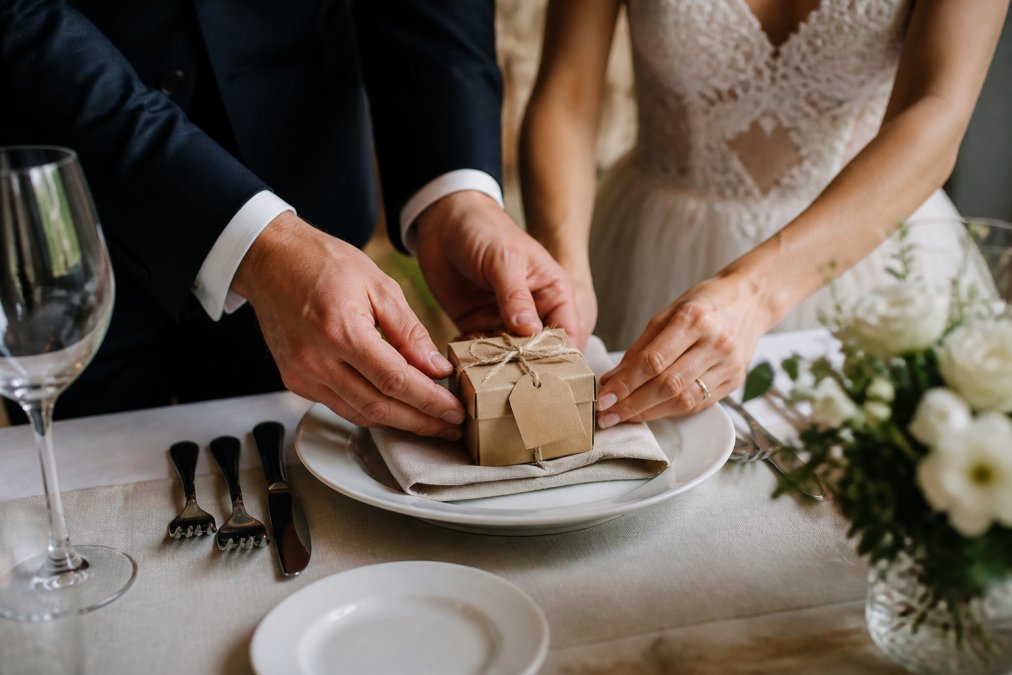
For couples with a smaller guest list, consider items that function as both favor and decor. A beautifully wrapped gift with a personalized message placed at each table setting elevates the entire reception aesthetic while giving guests something to anticipate. The unwrapping moment becomes part of the evening's entertainment.
| Favor Type | Cost Per Guest | Likely Outcome | Emotional Impact | Why It Works |
|---|---|---|---|---|
| Plastic trinket | $1-$3 | Discarded within months | Minimal | No utility, no connection |
| Edible treat | $2-$5 | Consumed immediately | Brief | Pleasure fades with the taste |
| Experience favor | $5-$10 | Creates a story | Lasting | Tied to a specific memory |
| Personalized blanket | $40-$60 | Used for years | Lasting | Functional sentimentality |
| Custom ornament | $8-$15 | Displayed seasonally | Moderate | Seasonal reinforcement |
The real test for any favor is simple: would you want to receive it at someone else's wedding? If the honest answer is no, your guests probably feel the same way. The most successful favors are ones the couple would genuinely want to own themselves, that authenticity translates directly to guest appreciation.
Wedding Favor Etiquette 2026: What Rules Still Apply?
Wedding favor etiquette has evolved, and the 2026 rules look different than they did a decade ago. The old expectation that every guest receives a favor, no exceptions, has softened. What matters more now is intentionality, and the math behind it.
Current etiquette guidance from The Knot's wedding planning and etiquette resources emphasizes that favors should reflect the couple's gratitude rather than check a box. If you can't afford meaningful favors for every guest, skipping them entirely is now considered acceptable. Guests would rather have no favor than a forgettable one.
The new rule: favor budget should follow guest relationship tier. Most planners now recommend a three-tier approach. For your wedding party and immediate family, invest $25-$50 per person in a substantial keepsake. For close friends and extended family, $10-$20 per person for a quality item with genuine utility. For plus-ones and distant acquaintances, either skip favors entirely or provide a modest consumable under $5. This tiered approach respects your budget while ensuring the people closest to you receive something that reflects your actual relationship.
The display rule has changed too. Favors hidden in a corner of the welcome table get missed. The 2026 standard is to make the favor part of the place setting, a wrapped item on the dinner plate or a blanket draped over the chair back. This doubles as decor and eliminates the awkward "is this for me?" moment. If you're using a favor table, place it near the exit rather than the entrance, so guests grab it on their way out rather than juggling it through dinner.
The dietary rule now has a companion: the household rule. If you choose edibles, you must account for dietary restrictions, gluten-free, nut-free, vegan, kosher, halal. But the newer consideration is household composition. A favor meant to be shared, like a bottle of wine or a jar of honey, should be offered per household, not per guest. This prevents the awkward moment where one member of a couple takes a favor and the other doesn't.
The charitable donation trend has matured. IRS guidance on charitable giving and event deductions outlines how couples can structure donations to causes that matter to them. But the 2026 evolution is the "dual favor", a small consumable for guests plus a donation in their honor. This costs $2-$4 per guest for the consumable while the donation communicates shared values. The key is telling guests clearly: a small card at each place setting that reads "In lieu of a traditional favor, we've donated to [cause] in your honor. Please enjoy this [treat] as our thanks."
The timing rule remains absolute: favors must be available at the reception, not mailed afterward. A favor that arrives three weeks post-wedding has lost its emotional context. The only exception is for guests who couldn't attend, sending them a small memento with your thank-you note is now considered a thoughtful touch rather than an obligation.
One emerging trend worth noting: the "favor budget reallocation" conversation. Many planners now advise couples to take the money they would have spent on favors for all 150 guests and redirect half of it toward upgrading the bar or adding a late-night snack station. The logic is simple: guests remember the quality of the food and drink far more vividly than they remember a $3 trinket. If your favor budget is under $500, the guest experience may benefit more from better hospitality than from a token gift.
Storage, Logistics, and DIY Pitfalls to Avoid
The DIY route tempts many couples looking to save money, but the hidden costs surprise almost everyone. Storage and logistics for DIY favors consume time and space you likely don't have in the weeks before your wedding.
A common mistake is underestimating the assembly time. If you're personalizing 150 favors by hand, each requiring five minutes of work, that's over 12 hours of labor. Add drying time, packaging, and transport to the venue, and you've committed multiple weekends to a project that might save a modest amount of money.
Bulk ordering from a professional source eliminates these headaches. When you order customized keepsakes from a vendor that handles personalization in-house, you receive finished products ready to display. The Federal Trade Commission guidance on product quality and shipping expectations protects your purchase, and you avoid the risk of a DIY disaster discovered the night before the ceremony.
Another pitfall: ordering favors that require specific storage conditions. Edible items can melt, stale, or attract pests. Fragile items break in transit. Know your venue's setup timeline and plan delivery accordingly.
Conclusion: Matching Your Favor Strategy to Your Wedding Budget
The choice between personalized wedding favors vs generic party gifts ultimately reflects your priorities. If your budget allows roughly $2 per guest and you're comfortable with most favors being left behind, generic options fill the requirement. If you want your gratitude to linger beyond the reception, investing in fewer, higher-quality personalized keepsakes delivers a better return on both your money and your guests' appreciation.
Wedding favors are one of the few elements of your day that guests take home and live with. Make that choice count. Elvora Gifts offers a curated selection of heirloom-quality woven blankets and personalized keepsakes that transform your favor table into a meaningful gesture. With free shipping to the USA on orders over $70, you can focus your budget on the items that truly matter.
Browse our collection and find the favor that tells your story.
Frequently Asked Questions
What wedding favors do people actually use?
Guests keep items they can consume or use daily. Edible favors like local honey or artisanal chocolates disappear quickly. Functional keepsakes such as a 100% cotton woven blanket with your names and date, coasters, or engraved bottle openers tend to stay in rotation. Generic trinkets like plastic keychains or shot glasses often end up in a drawer or the trash within a week. Focus on quality over quantity: one well-made item guests will reach for again beats five cheap pieces of clutter.
Are wedding favors worth the cost?
Yes, when they serve a purpose beyond decoration. The average couple spends $200 to $400 on favors for a 100-guest wedding. That money is worth it if the item expresses gratitude clearly and guests actually use it. Compare that cost to your total reception budget: favors usually account for under 2 percent of it. If a favor gets left behind or discarded, the money is wasted. A smaller number of thoughtful, useful items delivers a stronger return on investment than a larger quantity of generic party gifts.
What is the etiquette for wedding favors in 2026?
Wedding favor etiquette in 2026 centers on guest experience over obligation. You are not required to give a favor, but if you do, it should reflect your gratitude. The favor should connect to your wedding theme or story, be displayed clearly so guests notice it, and never require a speech to explain. Personalized wedding favors work best when they are practical. Skip items that need assembly or instructions. A handwritten thank-you note paired with a small gift also satisfies etiquette expectations without adding clutter.
How do personalized gifts impact the overall guest experience?
Personalized gifts make guests feel individually recognized, which lifts their overall impression of your wedding. When a guest sees their name or a detail tied to your relationship with them, the gesture reads as effort and genuine appreciation. That emotional response extends to how they remember your reception, your food, and your venue. Generic party gifts communicate a checkbox mentality. The gap matters most for guests who traveled or gave generous gifts themselves. A personal touch validates their effort.


