


Last Updated: November 12, 2026
Quick Summary
To choose a couple bracelet size, measure each person's wrist snugly with a string or ruler, then add about 0.5 to 1 inch of allowance for comfort. If you must keep it secret, measure a bracelet they already wear or choose an adjustable design.
- Measure each wrist separately with a snug string, then mark and measure the length.
- Add about 0.5 inch for a close fit, 0.75 inch for standard comfort, or 1 inch for relaxed.
- Bangles must clear the hand, so measure knuckle circumference and add 0.5 to 1 inch.
- For a surprise, measure a bracelet they already wear from end to end, excluding the clasp.
- Adjustable designs cover 1 to 2 inches of range, which absorbs most sizing error.
Table of Contents
- How to Measure Wrist Size for a Bracelet
- How Should a Bracelet Fit? Allowance and Comfort
- Bracelet Size Chart for Men and Women
- How to Find Bracelet Size Secretly
- Sizing Two Bracelets Together and Choosing Your Matching Pair
- Choose Your Couple Bracelets and Gift With Confidence
- Frequently Asked Questions
Getting the right couple bracelet size is the difference between a bracelet that gets worn every day and one that sits in a drawer. A thoughtful gift that is slightly too loose slides off, and one that is too tight becomes a daily irritation. When you are buying two bracelets for a couple, you have to get two sizes right at once, and the stakes feel higher.
A couple bracelet is meant to be worn. It works as a daily reminder of a promise, so comfort matters as much as style. The good news is that sizing is not complicated once you know which measurements count and how much room to leave.
Here is what makes couple sizing different from buying a single piece of jewelry:
- You are sizing two wrists, not one, so both need accurate numbers.
- The bracelets should look right together, not just fit separately.
- Surprise gifts mean you may not be able to ask for a size directly.
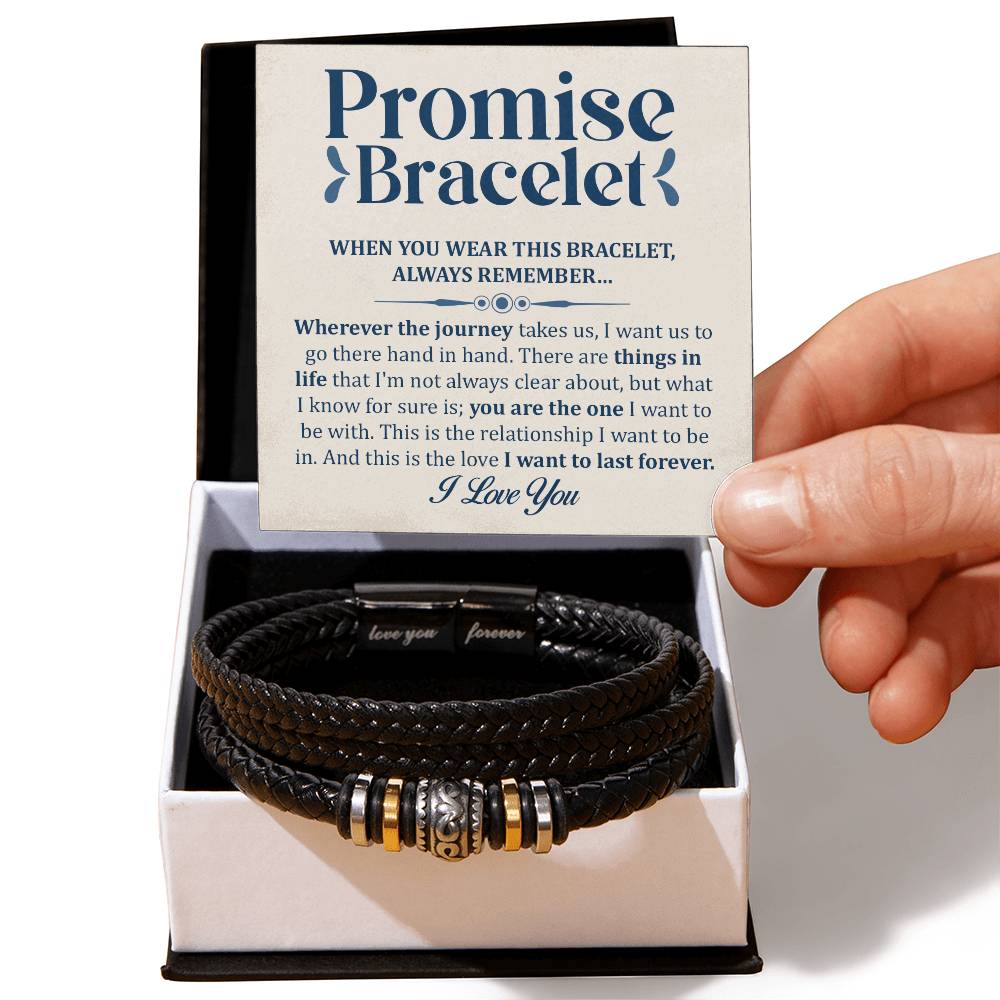
Keep the bracelet's total length in mind too. The Love You Forever Promise Bracelet measures 8.3 inches (21 cm) in total length.
How to Measure Wrist Size for a Bracelet
Measuring the wrist is the first step in choosing a couple bracelet size as a gift. A simple measurement, taken carefully, gets you most of the way there. Two methods work well, and each suits a different situation.
Measuring With a String and Ruler
This is the most accurate home method. You need a thin piece of string or paper strip, a ruler or tape measure, and a pen.
- Wrap the string snugly around the wrist where a bracelet would sit.
- Mark the point where the string overlaps.
- Lay the string flat and measure to the mark in inches or centimeters.
- Repeat the process for the second person.
Keep the string snug, not tight. Your fingers should slide under it easily.
Using a Bracelet You Already Own
If the recipient already wears a bracelet they like, it can be the best reference you have. Measure that bracelet's inside length from end to end, not including the clasp, then compare it to the length of the bracelet you plan to buy. This method works well when you want the new piece to sit the same way as their favorite.
How Should a Bracelet Fit? Allowance and Comfort
A bracelet should be snug enough to stay put but loose enough to move freely. Most fit guidance builds in a small allowance on top of the wrist measurement.
A common approach is to add about 0.5 to 1 inch (1.3 to 2.5 cm) to the measured wrist size. That extra room lets the bracelet slide over the hand and rest comfortably, without wobbling or pinching.
Use these quick guidelines:
- Close fit: Add about 0.5 inch. Good for a clean, sleek look.
- Standard comfort: Add about 0.75 inch. Suits most people.
- Relaxed fit: Add about 1 inch. Good for a chunkier bracelet or wrists that swell in the heat.
Remember that braided and beaded styles can feel bulkier than they look. When in doubt, go with the slightly larger size.
Bracelet Size Chart for Men and Women
A single wrist-to-length number is only a starting point. The bracelet's construction changes how much allowance you need, so use the chart below as a baseline and then adjust for style.
Baseline wrist-to-length chart
Measure the wrist snugly, then add the allowance that matches the fit you want.
| Measured Wrist Size | Close Fit (+0.5 in) | Standard Fit (+0.75 in) | Relaxed Fit (+1 in) |
|---|---|---|---|
| 5.5 in | 6.0 in | 6.25 in | 6.5 in |
| 6.0 in | 6.5 in | 6.75 in | 7.0 in |
| 6.5 in | 7.0 in | 7.25 in | 7.5 in |
| 7.0 in | 7.5 in | 7.75 in | 8.0 in |
| 7.5 in | 8.0 in | 8.25 in | 8.5 in |
| 8.0 in | 8.5 in | 8.75 in | 9.0 in |
| 8.5 in | 9.0 in | 9.25 in | 9.5 in |
Most adult women fall between 5.5 and 7.0 inches, and most adult men between 6.5 and 8.5 inches, but individual variation is wide enough that you should always measure rather than guess from gender.
Style-specific fit allowances
- Chain bracelets: Add the standard 0.75 inch. A chain with a lobster clasp and a short extender chain can absorb about 0.5 inch of error, so it is the most forgiving style for a gift.
- Bangle bracelets: A rigid bangle must pass over the widest part of the hand, not just the wrist. Measure the hand circumference at the knuckles with the thumb tucked in, then choose a bangle diameter that clears that measurement. As a rule of thumb, add 0.5 to 1 inch to the wrist measurement for the bangle's inside circumference.
- Cuff bracelets: Cuffs are open, so they adjust by squeezing or spreading. Choose a cuff whose inside circumference is within 0.5 inch of the wrist measurement; the opening lets the wearer fine-tune the fit.
- Beaded bracelets: Beads add bulk and reduce flexibility. Add 0.75 to 1 inch to the wrist measurement, and remember that a beaded bracelet with a stretch cord should feel snug enough not to slide over the hand.
- Adjustable bracelets: A slider or extender chain typically covers 1 to 2 inches of range. If you are unsure of the size, an adjustable design is the safest gift choice because the recipient can set the fit themselves.
Men's and women's sizing notes
Men's bracelets are often sized in the same wrist-to-length way, but wider wrists and larger hands mean the allowance should sit at the higher end of the range. For women, a close fit works well for delicate chains, while bangles and cuffs should be sized to clear the hand. Do not assume a "men's" or "women's" label reflects the actual length, check the listed total length against your measurement every time.
Confirm whether the listed length is total length before you buy.
How to Find Bracelet Size Secretly
A surprise gift means you cannot ask, "What is your wrist size?" The workaround is to gather indirect evidence and then choose a design with built-in margin for error. These methods range from most to least reliable.
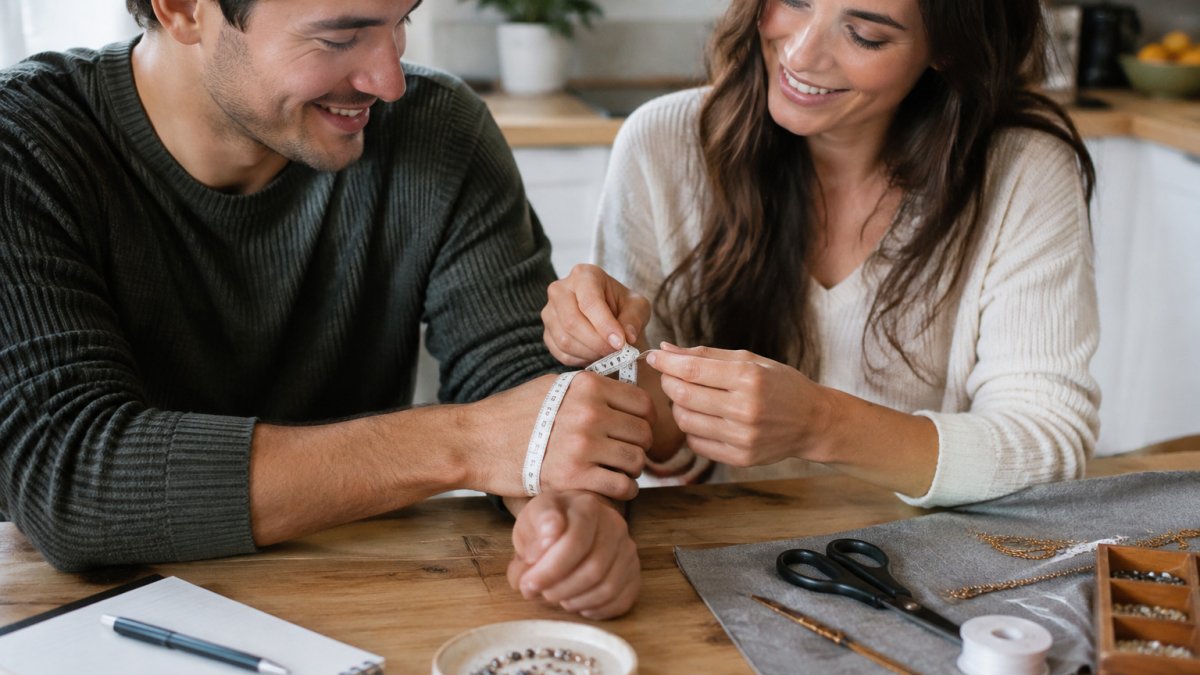
1. Measure a bracelet they already wear
This is the most accurate discreet method. When you are together, note a bracelet they wear often. Later, measure its inside length from end to end, excluding the clasp. Compare that number to the total length of the bracelet you plan to buy. If the existing bracelet has an extender chain, note which link they use, that tells you their preferred fit.
2. Use a watch or fitness band as a reference
A watch band or fitness tracker sits at roughly the same place as a bracelet. Check the band's size marking (many are printed on the inside of the strap) or measure the band's length.
3. Borrow and trace
Ask to try on a bracelet they own "because you like the style." While it is in your hand, lay it flat on a piece of paper and mark the inside length with a pencil. This takes seconds and leaves no trace.
4. Ask a friend or family member
A close friend, sibling, or parent may know the size or can measure a bracelet from the recipient's jewelry box without raising suspicion. Give them the wrist-to-length chart above so they report the right number.
5. Estimate from photos
If you have a clear photo of the recipient wearing a bracelet, you can estimate. Use a known object in the photo, a coin, a watch face, or a standard bracelet clasp, as a scale reference. This method is rough, so treat the result as a range rather than an exact number.
6. Measure casually during a shared moment
While watching a movie or sitting together, rest your hand on their wrist and note where your thumb and middle finger meet. Later, wrap a string around your own wrist to that same overlap point and measure it. This is approximate but useful as a cross-check.
What to do when you still cannot get a number
- Choose an adjustable design. A slider clasp or extender chain covers 1 to 2 inches, which absorbs most sizing error.
- Buy from a seller with a clear exchange policy. Confirm the return window and whether resizing or exchanges are free before you order.
- Include a gift receipt. It lets the recipient exchange the size without awkwardness.
- Size up rather than down. A bracelet that is slightly loose can be worn; one that is too tight cannot.
Watch out: Do not measure a wrist right after exercise, in cold weather, or after salty food, swelling and constriction can shift the measurement by up to 0.25 inch. Use a normal-temperature moment and measure twice.
Sizing Two Bracelets Together and Choosing Your Matching Pair
Buying a couple's set means sizing two people at once. Measure each wrist separately and write both numbers down before you choose the bracelet length. The two sizes will often differ, and that is fine. What matters is that each bracelet fits its wearer comfortably.
Here is a simple way to match the pair:
- Measure both wrists and apply the same allowance to each. For more on coordinating the pair, see how to choose matching jewelry for long-distance couples.
- Choose the same bracelet style for both so the pair looks coordinated.
- If the sizes differ a lot, consider matching the style but adjusting the length.
The Promise Things in Life Bracelet and the Love You Forever Promise Bracelet both use braided vegan leather with stainless steel beads and a magnetic clasp.
Choose Your Couple Bracelets and Gift With Confidence
Once you know both sizes, you can shop with confidence. Start with the total length, add your allowance, and pick the bracelet that matches. If you want to see the options for yourself, browse the Love You Forever Promise Bracelet and check its length against your measurements.
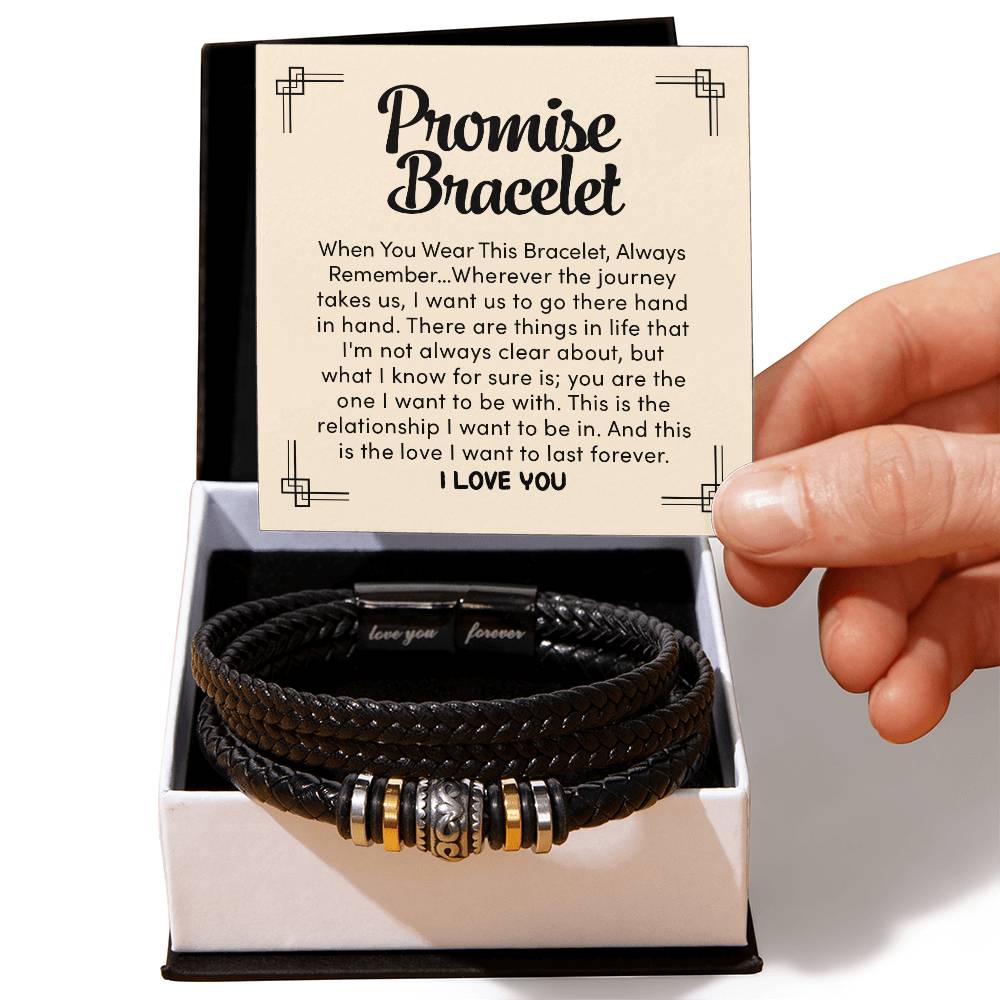
If the sizes still feel uncertain, choose the slightly larger option, since a bracelet that is a little loose is easier to live with than one that is too tight. For more ideas beyond bracelets, read our guide to Best Non-Engraved Personalized Anniversary Presents before you decide.
Frequently Asked Questions
How do you find someone's bracelet size without asking?
Borrow a bracelet they already wear and measure its inside length, then compare it to a similar style. You can also trace the inside of a bracelet they own onto paper. Ask a friend or family member who sees them often, and check whether they wear a watch or bangle you can measure. Keep the measurement close to the wrist bone, and add the standard fit allowance of 0.5 to 1 inch (1.3 to 2.5 cm) so the bracelet slides on comfortably.
How do you measure wrist size for a bracelet?
Wrap a flexible tape or string snugly around the wrist where a bracelet would sit, just above the wrist bone. Mark the string and measure its length in inches or centimeters. Then add 0.5 to 1 inch (1.3 to 2.5 cm) for comfort. For a couple bracelet, measure each partner separately rather than assuming their sizes match, since the difference can be significant.
How much extra room should a bracelet have?
Most bracelets need about 0.5 to 1 inch (1.3 to 2.5 cm) of extra length beyond the wrist measurement. Less room can feel tight, especially with beaded or braided styles that sit close to the skin. More room can let the bracelet slide around. The Love You Forever Promise Bracelet measures 8.3 inches (21 cm) in total length, so check that figure against your recipient's measurement before ordering.
Can a bracelet be resized if it does not fit?
Adjustability depends on the clasp and materials. Confirming the length before purchase is the safest approach. If you are unsure of the size, measure carefully and consider a gift box or gift-ready packaging so the piece is presented well regardless of fit.


