


Table of Contents
- The Real Cost of Personalization: What You're Actually Paying For
- Watch Engraving and Resale Value: What Collectors Actually Want
- Does Engraving Void Watch Warranty and Affect Water Resistance
- Best Watch Engraving Ideas for Husband and Other Recipients
- Sentimental Value vs. Investment Grade: Understanding the Difference
- Replacement Caseback Options and Logistics
- When Engraving Makes Sense and When It Doesn't
- Conclusion
Last Updated: August 25, 2026
The Real Cost of Personalization: What You're Actually Paying For
Engraving transforms a timepiece into a heirloom, but it comes with permanent trade-offs. When you customize a watch with initials, a date, or a message, you affect resale value, warranty coverage, and the watch's future appeal in ways that deserve careful thought before you commit.
At Elvora Gifts, we help individuals understand what they're actually purchasing when they choose a custom engraved watch. The investment isn't just the price tag, it's the permanence of your choice and how that impacts the timepiece's lifecycle. A watch engraved with initials becomes a deeply personal keepsake, but also harder to sell, trade, or pass along to someone with different preferences.

The core question isn't whether engraving is "worth it", that depends entirely on your intent. If you're buying a watch as a sentimental gift that will be worn and treasured for decades, engraving adds emotional value that no resale price can quantify. If you're viewing the watch as an investment or a piece you might sell later, engraving significantly reduces its appeal to future buyers.
Watch Engraving and Resale Value: What Collectors Actually Want
Personalization creates a barrier to resale that most casual buyers underestimate. A watch engraved with your initials or a specific date belongs to you, and only you. When you try to sell it later, the next buyer inherits an inscription that has no meaning to them. Custom engraving narrows the potential audience from "anyone who likes this model" to "only people who either don't mind the engraving or specifically like it."
In the secondary market, collectors actively seek original, unmodified pieces. Aftermarket modification, including engraving, is viewed as a reduction in provenance and authenticity. A luxury watch or vintage piece can lose 10-20% of its resale value if engraved, depending on placement and depth (peer-reviewed research). Serious collectors view the caseback as part of the watch's integrity, and any alteration signals personalization rather than preservation.
What collectors actually want is a watch that maintains its original condition and provenance. If you're buying a custom engraved watch as a gift for someone who values heirloom potential, choose the recipient carefully, that watch will be tied to that person's name or date for as long as it exists.

| Engraving Placement | Impact on Resale Value | Best For |
|---|---|---|
| Caseback | Moderate to high reduction | Sentimental keepsakes only |
| Case side | High reduction | Personal wear, not resale |
| Bracelet/strap | Minimal reduction | Gifts with future flexibility |
| No engraving | No reduction | Investment-grade watches |
Does Engraving Void Watch Warranty and Affect Water Resistance
Manufacturer warranties typically do not void automatically when a watch is engraved, but details matter. Most warranties cover defects in materials and workmanship, not damage caused by aftermarket modifications. If engraving damages the caseback seal or creates structural weakness, the manufacturer is unlikely to cover related repairs.
The real risk is water resistance. Watches are sealed using gaskets, O-rings, and precise caseback threading. Laser engraving heats the metal and can affect material properties around the engraved area (nist.gov). Mechanical engraving creates vibration and pressure that could disturb the seal. According to watch industry standards for water resistance ratings, a compromised seal can significantly reduce a watch's water resistance rating.
The safest approach: have engraving done by a professional jeweler or the watch manufacturer themselves, not a generic engraving shop. Some manufacturers offer factory engraving that maintains seal and warranty coverage. Third-party engraving introduces uncertainty.
Best Watch Engraving Ideas for Husband and Other Recipients
The most meaningful engravings are personal without being overly specific. Initials, a date, or a short phrase reflecting the relationship or occasion work best. Avoid lengthy messages, they're harder to read when engraved and date the watch to a specific moment in a limiting way.
Engraving Placement: Caseback vs. Case
The caseback is the standard choice for engraving because it's less visible during daily wear. An engraving on the caseback remains a private detail, something the wearer discovers when they remove the watch. This placement preserves the watch's appearance while keeping personalization intimate.
Engraving on the case itself is more visible but also more permanent and harder to ignore. Bracelet or strap engraving is a middle ground, the engraving sits on the metal bracelet or leather strap rather than the watch body itself. This approach allows personalization with minimal impact on the watch's core structure. If the bracelet or strap is replaced later, the engraving goes with it, making this the most flexible option for future modifications.
Engraving Techniques and Depth Considerations
Laser etching is the most common modern engraving method. A laser beam vaporizes a thin layer of metal, creating a precise mark. Laser engraving is fast, accurate, and produces clean, readable text with shallow depth (typically 0.5mm to 1mm), so the mark is visible but doesn't structurally weaken the metal.
Mechanical engraving uses a rotating tool to cut into the metal, creating deeper marks and a more tactile feel. It requires more skill but produces a more traditional, handcrafted look. Deeper engravings increase the risk of compromising the caseback seal.
Hand engraving by a master engraver is the most expensive option but produces the highest-quality result. This method is rarely used for watch engravings because of cost, but it's available for high-end luxury pieces.
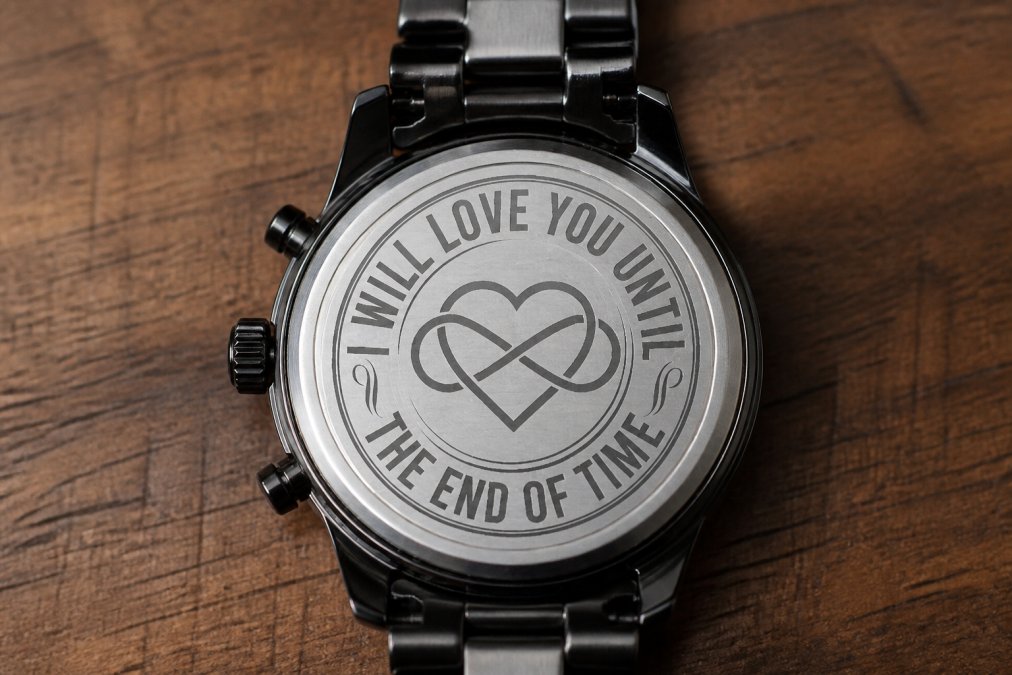
For most gift-givers, laser engraving strikes the best balance: it's precise, affordable, and minimally invasive.
Sentimental Value vs. Investment Grade: Understanding the Difference
A watch becomes an investment when its owner intends to preserve it, maintain its condition, and potentially sell it for profit or pass it to the next generation. An investment-grade watch is typically a luxury timepiece, limited edition, or vintage piece with recognized horology value.
A sentimental watch is chosen for its personal meaning. It might be a modest quartz timepiece engraved with an anniversary date or a mid-range chronograph gifted to mark a milestone. The sentimental watch's value lies entirely in its emotional significance to the wearer, not in resale potential or collectibility.
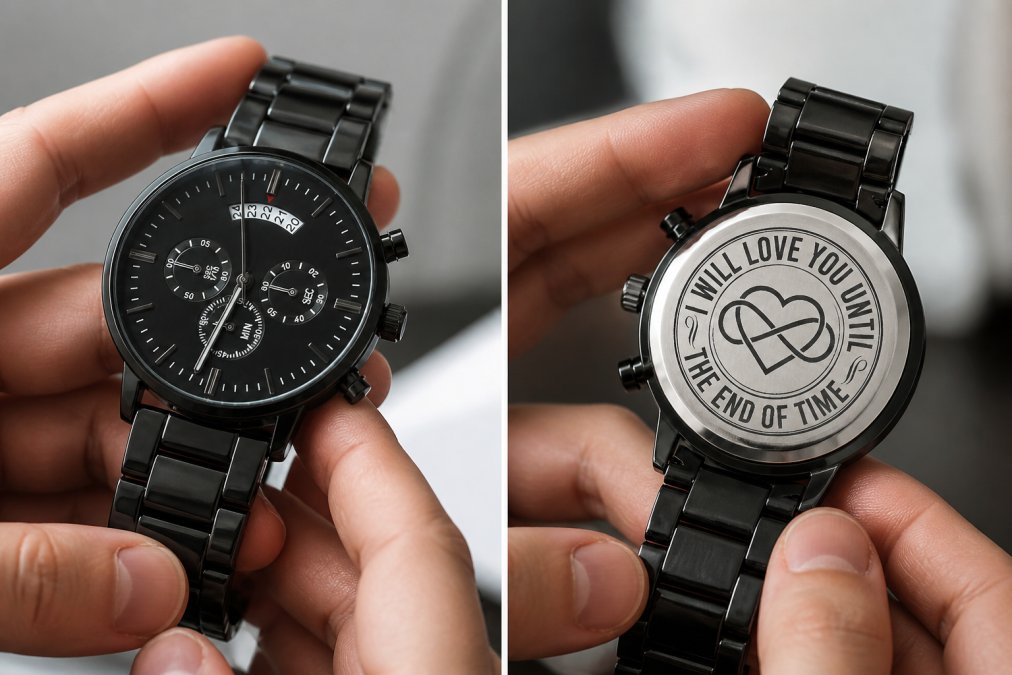
The critical difference: investment-grade watches should remain unmodified. Engraving an investment-grade watch reduces its appeal to future collectors and lowers secondary market value. Sentimental watches benefit from personalization. Engraving a watch you're giving to your spouse or close family member as a keepsake reinforces its purpose as a personal, irreplaceable gift.
When deciding whether to engrave, ask yourself: Will this watch be worn and treasured by one person, or might it be sold, traded, or passed along to someone else? If the answer is "worn by one person," engraving adds meaning. If the answer is "might be resold," skip the engraving.
Replacement Caseback Options and Logistics
If you own a watch with an unwanted engraving and want to remove it, replacement is possible but not always practical. Many watches have caseback covers that screw on or snap off. Common brands like Seiko, Citizen, and Timex have readily available replacement casebacks. Luxury brands like Rolex or Omega may require purchasing through authorized dealers at significant cost, sometimes hundreds of dollars. Vintage or discontinued models may have no replacement caseback available at any price.
For watches with permanently sealed or soldered casebacks, replacement is not an option. Your only recourse is to have the engraving professionally refinished or polished down, which partially or completely removes the engraving but also removes a thin layer of metal. This works for shallow laser engravings but may not be effective for deep mechanical engravings.
If you're considering engraving a watch, factor in the replacement cost before you commit. For an expensive watch, keeping the caseback pristine may be worth more than the sentimental value of an engraving.
When Engraving Makes Sense and When It Doesn't
Engraving makes sense when:
- You're giving the watch as a direct gift to someone you know well and expect to wear it for decades
- The watch is a mid-range or entry-level timepiece where resale value is low
- The engraving reflects a significant life event (marriage, birth, retirement, military service)
- The recipient values personalization over future resale potential
- You're using a professional engraver who understands watch construction and can preserve the seal
Engraving doesn't make sense when:
- The watch is a luxury piece or limited edition with known collector value
- The recipient might want to sell or trade the watch later
- You're uncertain about the relationship's permanence
- The watch is a vintage or rare piece where originality is part of its value
- You're using a generic engraving service that doesn't specialize in watches
A custom engraved watch from Elvora Gifts, like the "I Will Love You Until the End of Time" men's watch at $69.95, is an ideal candidate for personalization. These watches are designed as keepsakes and gifts, not investment pieces. Engraving reinforces their purpose as sentimental items meant to be worn and cherished by one person.
A custom engraved watch is worth the investment when it aligns with your actual intention for the timepiece. If you're buying a watch to mark a meaningful moment and expect the recipient to wear it as a cherished keepsake, engraving transforms it from a generic gift into a personal heirloom. The permanence is the point.
However, if there's any chance the watch will be resold, traded, or passed to someone else, engraving is a permanent reduction in its appeal to future owners. The decision is a matter of clarity about what the watch means and who it's for.
When you're ready to find the perfect timepiece to engrave, Elvora Gifts offers a curated selection of personalized men's watches designed specifically as meaningful gifts. Each watch ships in a gift box with your custom engraving, and orders over $70 qualify for free shipping. Shop Now to explore personalized watch options that turn a special occasion into a lasting memory.
Frequently Asked Questions
Is it worth getting a watch engraved?
Whether engraving is worth it depends on your primary goal. If you're buying a custom engraved watch as a sentimental gift or heirloom, the emotional value often justifies the personalization. However, if you plan to resell the timepiece or treat it as an investment-grade luxury item, engraving can reduce its secondary market appeal. The key is matching the personalization strategy to your intent: engrave for meaning, leave blank for resale flexibility.
How does watch engraving affect resale value?
Engraved watches typically experience depreciation on the secondary market because personalization narrows the pool of potential buyers. A timepiece engraved with initials or a date appeals mainly to the original recipient or someone with an emotional connection to that message. Collectors and investment-focused buyers generally prefer unmodified casebacks and original provenance. Engraving on the caseback is less damaging than case-side modifications, and professional laser etching preserves metal integrity better than deep hand-engraving.
Does engraving void watch warranty?
Most manufacturers consider engraving an aftermarket modification that may affect the original warranty. Many brands distinguish between factory engraving (which preserves warranty coverage) and third-party engraving (which typically does not). If warranty protection matters, request factory engraving at purchase or choose watches with engraving services built into the original offering. Always confirm warranty terms before personalizing, as policies vary significantly between luxury and mid-range brands.
What are the best engraving ideas for a personalized watch?
Effective watch engravings balance meaning with versatility. Initials, dates of significant events (anniversaries, births), and short meaningful phrases work well. Avoid overly specific messages that limit the watch's appeal if circumstances change. Caseback engravings are less visible during daily wear, making them ideal for sentimental inscriptions. Consider engraving formats that age gracefully: classic initials or coordinates of a meaningful location tend to feel timeless, while trendy phrases may feel dated quickly.
Can you replace a watch caseback if you change your mind about the engraving?
Yes, replacement casebacks are available for many watch models, though the process varies by brand and watch type. Stainless steel casebacks are typically more affordable and easier to source than precious metal alternatives. Costs can vary depending on the watch's rarity and material. You'll need to send the watch to a qualified horologist or the manufacturer for caseback replacement, which adds labor costs. Planning ahead, engraving only the caseback rather than the case, preserves this option if you later want to restore the watch to an unmodified state.
This article was written using GrandRanker


